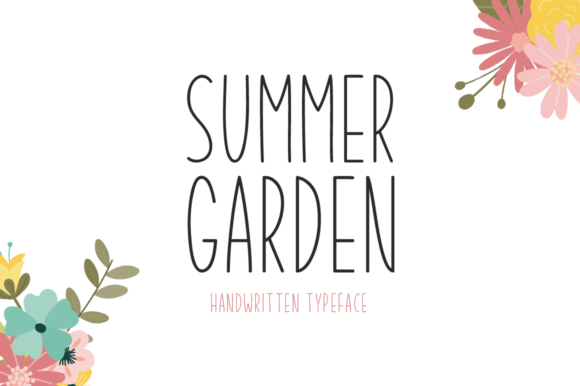
Summer Garden: A Versatile Display Font for Modern Design Workflows
Summer Garden is a simple and neat lettered display font that brings a sense of natural elegance to any design project. With its clean lines and unique character, it stands out as a go-to choice for professionals and creatives looking to add visual interest without sacrificing readability. Whether you're designing a logo, crafting social media content, or preparing marketing materials, Summer Garden offers the flexibility needed to enhance your creative output.
Understanding the Role of Summer Garden in Design
At its core, Summer Garden is a display font, which means it's best suited for headings, titles, and other prominent text elements rather than long-form body copy. Its natural and unique style makes it incredibly fitting for a wide range of applications, from branding to digital interfaces. The simplicity of its design ensures that it remains legible even at smaller sizes, making it a practical choice across various platforms and mediums.
When integrating Summer Garden into your design workflow, consider how it complements your overall aesthetic. It pairs well with both minimalist and more ornate styles, offering versatility that can adapt to different brand identities. This makes it an excellent option for designers who need a font that can transition seamlessly between projects without requiring constant changes.
Using Summer Garden in Different Stages of a Project
Before starting a new project, selecting the right font can set the tone for your entire design. Summer Garden can be used during the initial brainstorming phase to visualize how your text elements will look. Tools like Adobe Illustrator or Figma allow you to experiment with different fonts and see how they interact with your color schemes and layouts.
During the execution phase, Summer Garden can be applied directly to your design assets. It works particularly well for headlines, call-out boxes, and section headers. Its distinctiveness ensures that important information stands out, making it ideal for presentations, websites, and promotional materials.
After completing a project, using Summer Garden can help maintain consistency in your branding. If you're creating a series of related designs—such as a social media campaign or a product line—the same font can be used across all materials to reinforce brand recognition.
Integrating Summer Garden with Other Tools and Resources
One of the strengths of Summer Garden is its compatibility with a variety of design tools and platforms. It is available in multiple formats, including TTF, OTF, and WOFF, ensuring that it can be used across desktop applications, web development environments, and mobile apps. This broad compatibility makes it easy to integrate into your existing workflow, whether you're working on print materials or digital content.
For web developers, using Summer Garden in CSS allows for seamless integration into responsive designs. By defining the font-family property correctly, you can ensure that the font displays consistently across different devices and browsers. Additionally, pairing Summer Garden with complementary sans-serif fonts for body text helps maintain a balanced and readable layout.
Practical Implementation Tips and Workflow Examples
To get the most out of Summer Garden, start by understanding its characteristics. Since it's a display font, avoid using it for extended blocks of text. Instead, use it sparingly to highlight key messages or create visual hierarchy within your design.
Here’s a practical example of how you might incorporate Summer Garden into a website redesign:
- Research: Identify the brand’s voice and target audience. Determine if a natural, elegant font like Summer Garden aligns with these elements.
- Testing: Apply Summer Garden to sample pages and test its appearance on different screen sizes and resolutions.
- Implementation: Once approved, define the font-family in your CSS and apply it to headings and other prominent text elements.
- Review: Ensure that the font maintains readability and does not clash with other design elements such as colors or images.
Another scenario could involve using Summer Garden in a marketing brochure. In this case, you would use it for the title page, subheadings, and any call-to-action buttons. Pairing it with a clean sans-serif font for body text ensures that the reader can easily navigate through the content while still being visually engaged.
Factors to Consider When Using Summer Garden
While Summer Garden is highly versatile, there are a few factors to consider when deciding whether it’s the right font for your project. First, think about the context in which the font will be used. A font that looks great on a website may not translate well to a printed poster, so it's important to test it across different mediums.
Second, consider the overall design system you're working with. If your brand already has a defined typography system, make sure that Summer Garden fits within that framework. This helps maintain a cohesive look across all touchpoints.
Finally, keep in mind the importance of accessibility. While Summer Garden is visually appealing, it should not compromise readability. Ensure that the font size and spacing are appropriate for the intended audience and medium.
Long-Term Use and Consistency
For businesses and individuals who rely on consistent branding, using Summer Garden across all communication channels can help build recognition over time. This includes everything from business cards and packaging to digital advertisements and email newsletters.
Creating a style guide that includes specific instructions on how to use Summer Garden can also be beneficial. This guide can outline when and where to use the font, along with examples of good and bad practices. This level of detail ensures that everyone involved in the design process understands how to implement the font effectively.
Additionally, keeping track of how Summer Garden is used across different projects can provide valuable insights into its effectiveness. By analyzing feedback and performance metrics, you can determine if the font continues to meet your needs or if adjustments are required.
Overall, Summer Garden is more than just a font—it's a tool that can enhance your design work and support your creative goals. By understanding its strengths and limitations, you can integrate it smoothly into your workflow and achieve professional results that stand out in today's competitive market.